

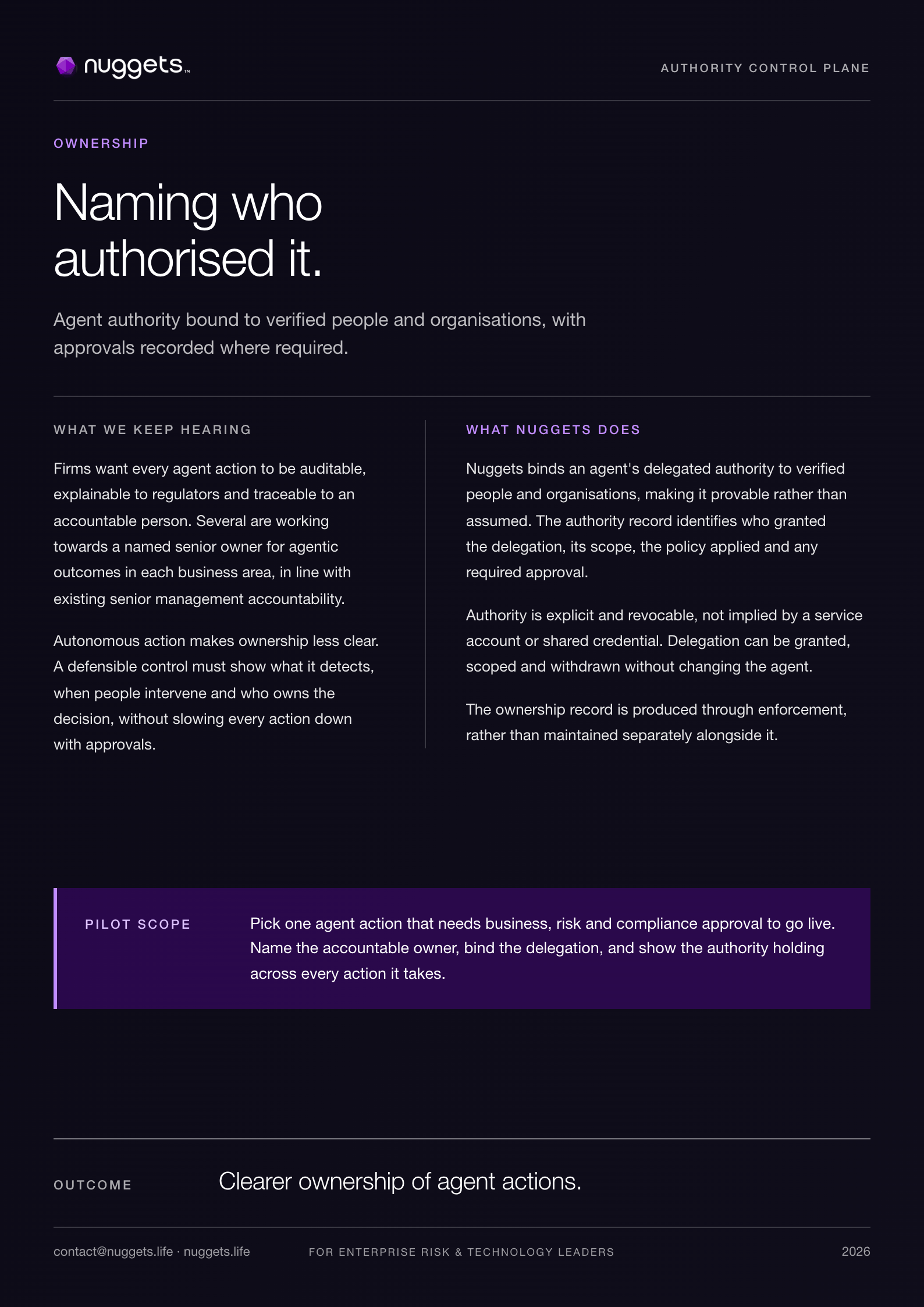
Ownership: naming who authorised it
Agent authority is bound to verified people and organisations, so every action traces back to an accountable owner. Authority is explicit and revocable, rather than implied by a service account.
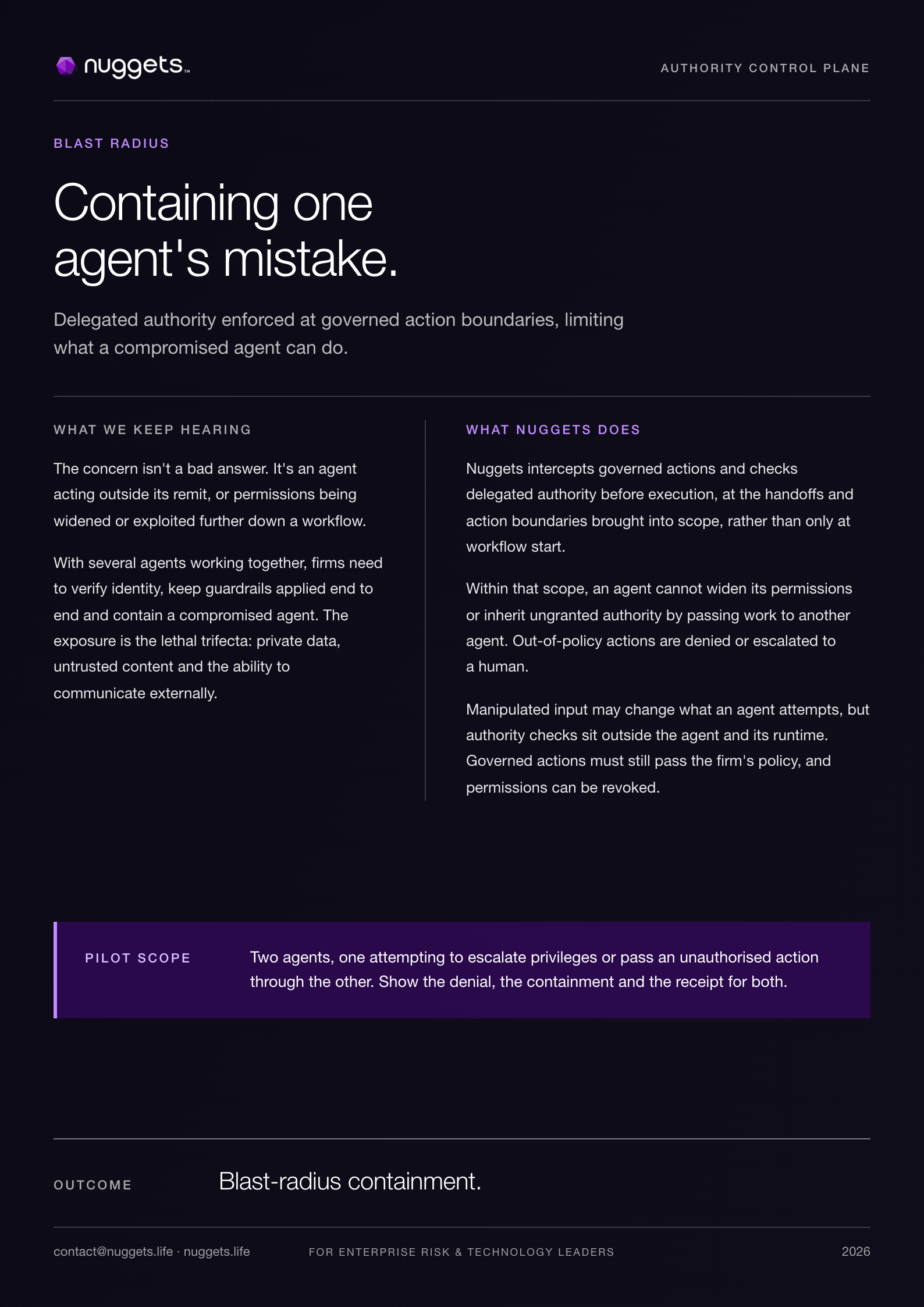
Blast radius: containing one agent’s mistake
Authority is checked before execution, at the handoffs and action boundaries you’ve brought into scope. An agent can’t widen its own permissions or inherit authority it wasn’t granted by passing work to another agent.
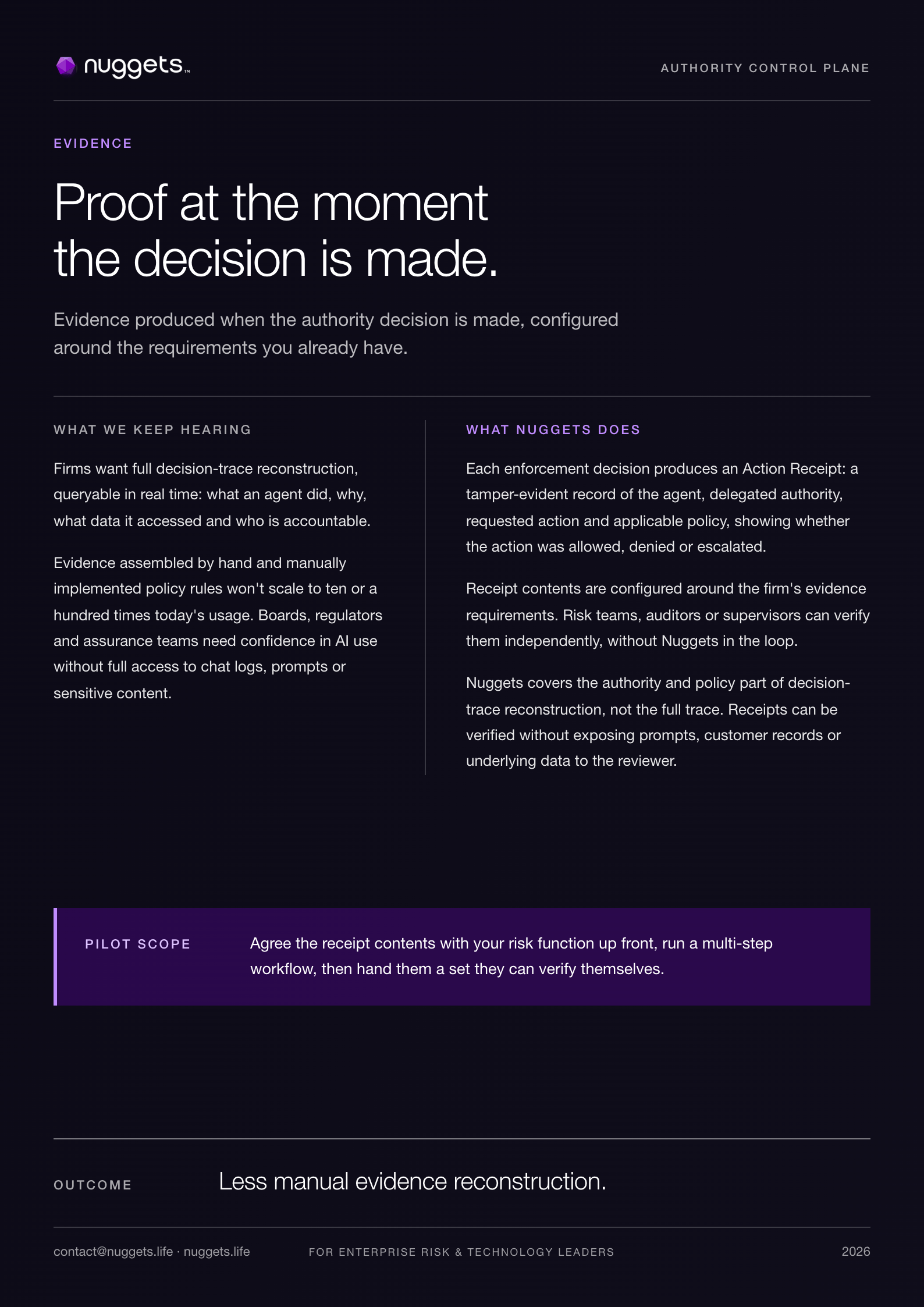
Evidence: proof at the moment the decision is made
Every enforcement decision produces an Action Receipt covering the agent, its authority, the action requested and the policy applied. Your auditors can verify them without Nuggets in the loop, and without seeing the underlying data.
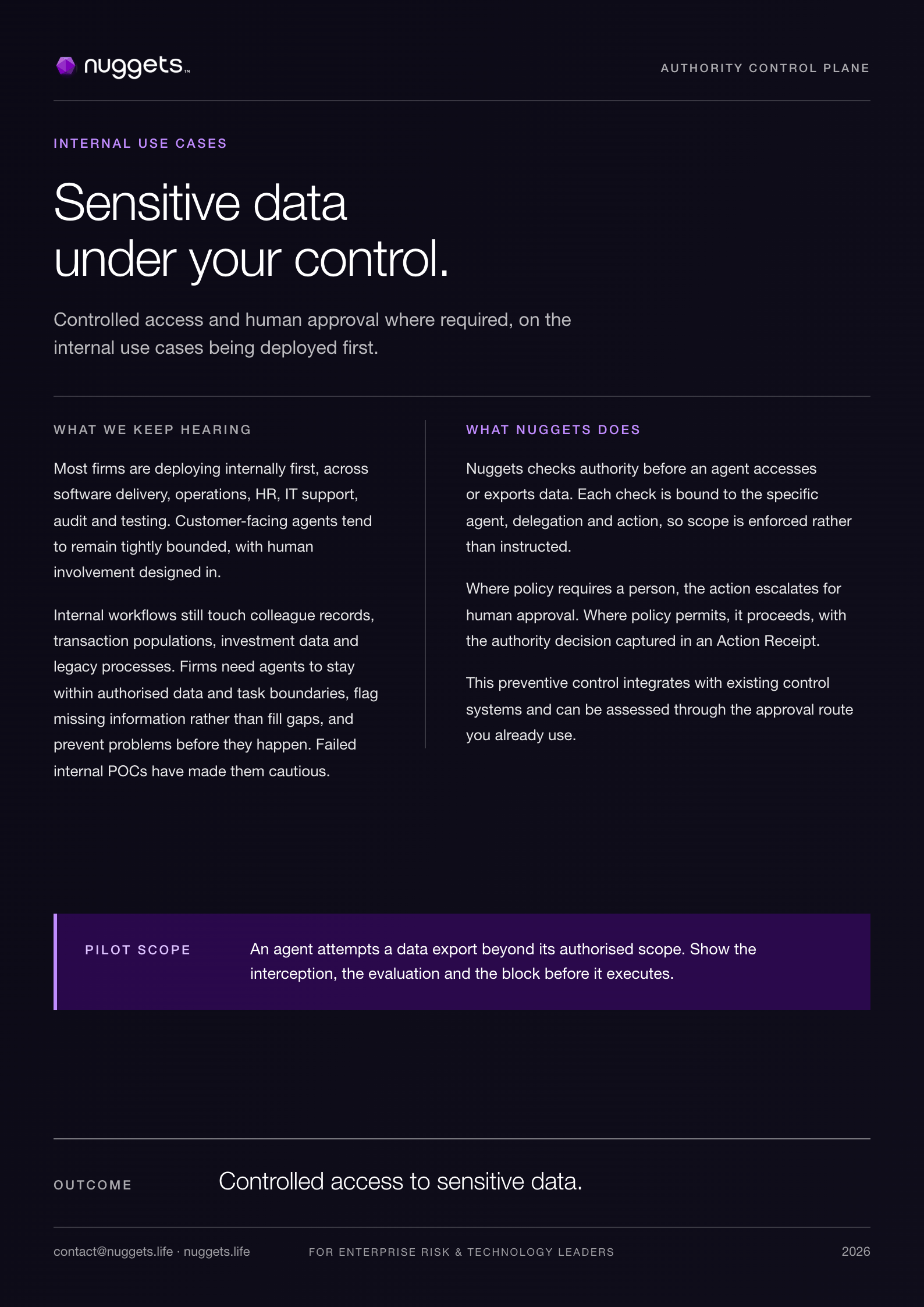
Internal use cases: sensitive data under your control
Authority is checked before an agent accesses or exports data, bound to that specific agent, delegation and action. Where your policy requires a person, the action escalates for approval instead of going ahead.
Runtime coverage: your agents won’t all live in one place
One authority policy applies across connected runtimes, alongside the IAM and clouds you already run. How much it covers depends on which integrations you bring into scope.
If one of these matches something you’re trying to get into production, tell us which and we’ll scope the pilot with you.